
Why Weight-Loss Medications Aren’t enough And Why So Many People Regain the Weight
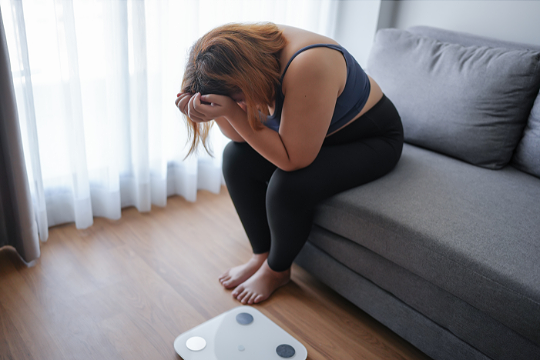
Back in July 2025, I shared my initial thoughts on weight-loss medications
Let me be clear from the outset: I’m not against weight-loss medication. If it helps someone reach a healthier starting point, that can be valuable.
My issue — and what recent headlines now seem to confirm — is this:
Weight-loss medications do not solve the problem on their own.
They have a short-term effect on the body, but they don’t address what caused the problem in the first place.
The recent media coverage on 8 January 2026 was blunt.
The BBC reported that people who stop weight-loss injections regain weight four times faster than those who lose weight through diet alone.
The Daily Mail, went further — essentially implying these drugs may need to be taken for life.
Of course medications work — up to a point.
But here’s what’s missing.
Weight loss demands an IDENTITY SHIFT
Significant weight loss doesn’t just change how you look.
It challenges who you are, how you live, how you cope, and what you default to under pressure.
If weight loss is going to last (without a lifetime of meds), we have to accept that a deeper change is required — not just biologically, but psychologically and behaviourally.
Can you remember what it felt like to be inflamed and overweight?
I can.
I was overweight as a teenager. Low confidence, a sweet tooth, and I had very little athletic belief or ability.
Later in my 20s intense rowing training stripped weight off me — but when the pressures of work and life increased in my 30s and 40s, inflammation and weight crept back. Who I was in my 20s was different to who I would become in my 30s and 40s.
At my heaviest, I was over 100kg at six foot tall — and no, it wasn’t healthy lean muscle.
My eating drifted toward convenience and ultra-processed food.
I drank more, largely through work related stress.
Strength training disappeared and the old reasons for staying fit for rowing gradually reduced.
Movement became less frequent and less enjoyable.
I didn’t always notice ‘feeling’ heavy — but I saw it in my rowing and running times, in my stiffness, my recovery, and in the quiet acceptance of labels I thought I’d left behind years earlier.
When I felt rubbish or mocked for looking bigger than normal, I comfort ate and drank accordingly.
That wasn’t a failure of willpower — it had become part of my identity.
Why calorie restriction isn’t enough on it’s own
Weight-loss medication can feel like a quick solution — and for some people, it can be a useful tool. The problem is that these medications are designed to artificially curb appetite by suppressing certain biological mechanisms, temporarily reducing calorie intake — but only while you’re taking them.
They don’t solve long-term satiety or address the habits and behaviours that existed before the medication. Once the drug is removed, the body’s built-in, thermostatic-like systems naturally push it back toward its previous state.
If you want to come off medication — or stop dieting altogether — the new you cannot live the same way the old you did.
That means:
Eating differently — not just less, but better
Drinking differently
Managing stress differently
Moving regularly, even if you never did before
Developing resilience for when life inevitably gets messy
This is the part most people are unprepared for.
They’ve lost weight — but they have:
No exercise history
No strength base
No understanding of satiety or muscle loss
No framework for long-term behaviour change
No plan for life after the medication
So when appetite suppression disappears — whether from medication, dieting, or restriction — the old identity quietly returns.
And the weight follows.
Where coaching fits

This is where coaching and personal training must work together.
I don’t believe in punishing exercise regimes or rigid plans to complement sustainable weight-loss
But:
Rebuilding lean muscle and physical capability
Learning how your body responds to food, movement, and stress
Creating habits that survive bad weeks and real life
Developing confidence in what your body can now do
Transitioning from ‘weight-loss mode’ to long-term ownership
Medication can buy you a window of opportunity.
But if nothing changes inside that window —
If no new habits are built,
If no strength is developed,
If no accountability exists —
Then coming off medication will always feel like falling off a cliff.
If you’re using — or considering — weight-loss medication, the real question isn’t:
‘How much weight can I lose?’
It’s this:
‘Who am I becoming while I’m losing it — and who will I be when the medication stops?’
That’s the gap I help people bridge.
If this has struck a chord, consider using it as a starting point — to sit down with me and map out what comes next, or to share it with someone you care about who might be quietly struggling. The right conversation, at the right time, can change everything.
